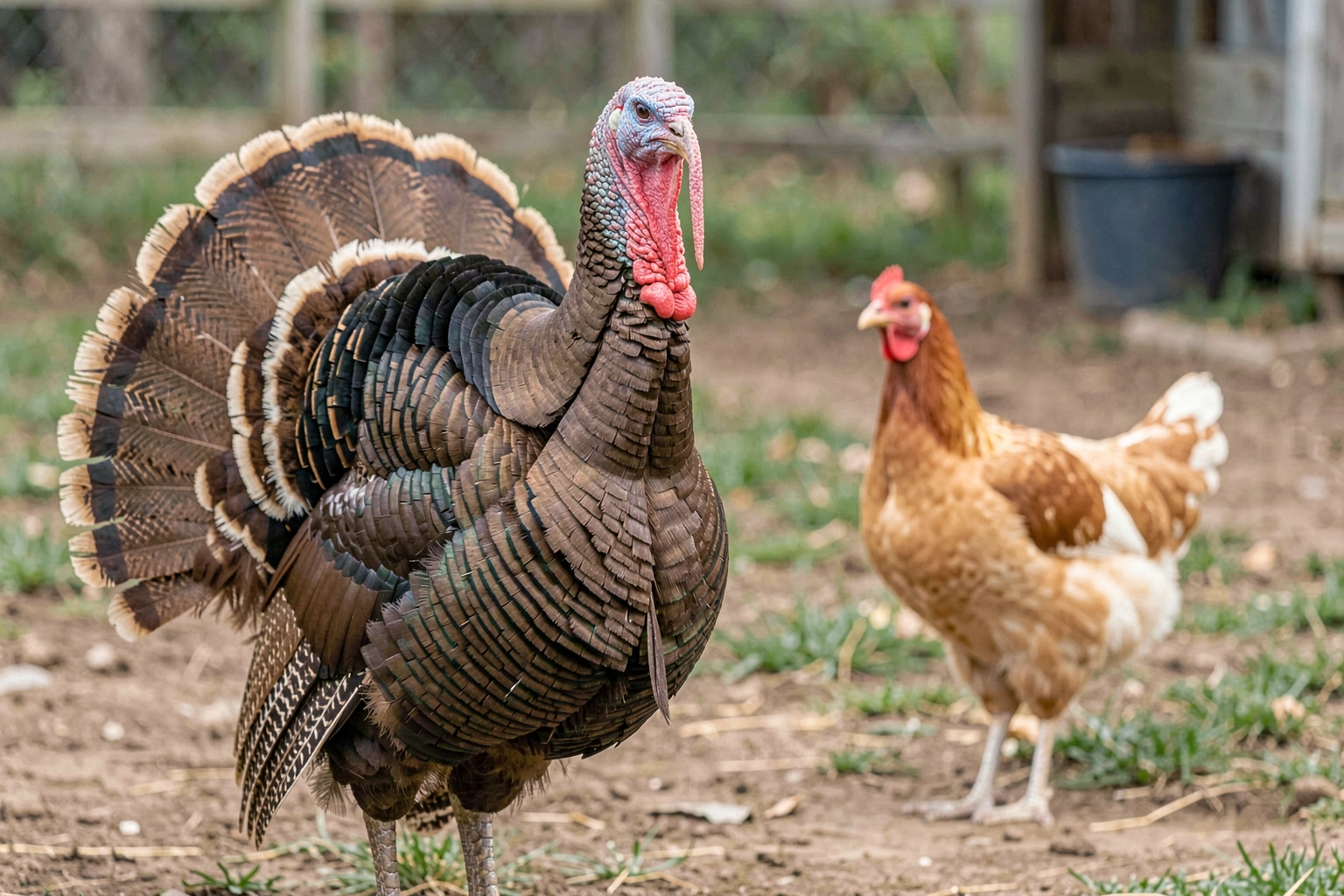
A turkey is absolutely a bird, not a chicken. They are two completely separate species that happen to belong to the same broad bird order, Galliformes, which is basically the scientific grouping for large, ground-loving fowl. So while turkeys and chickens are distant relatives, calling a turkey a chicken would be like calling a wolf a dog. Related, yes. The same animal, no.
Is Turkey a Bird or a Chicken? Direct Answer and Differences

Maya Bennett
20 Mar 2026
Where turkeys actually fit in the bird family tree
Turkeys belong to the order Galliformes and the family Phasianidae, landing in a specific subfamily called Meleagridinae. Chickens (Gallus gallus domesticus) also fall under Galliformes and Phasianidae, which is why people sometimes blur the line between them. But at the subfamily level, they split off in completely different directions. Think of it like two cousins who share a last name but live in different countries and live very different lives.
The word "gallinaceous" gets thrown around in birding circles, and it just means "chicken-like" or "fowl-like." It applies to the whole Galliformes group, including turkeys, pheasants, quail, and yes, chickens. So if someone calls a turkey a gallinaceous bird or a fowl, they are not wrong. But if they call it a chicken, they are.
| Trait | Turkey | Chicken |
|---|---|---|
| Order | Galliformes | Galliformes |
| Family | Phasianidae | Phasianidae |
| Subfamily | Meleagridinae | Phasianinae |
| Species (wild/domestic) | Meleagris gallopavo | Gallus gallus domesticus |
| Body size | Much larger | Smaller |
| Incubation period | 28 days | 21 days |
| Eggs per breeding season | Up to 130 (over ~28 weeks) | Varies widely by breed |
| Flight ability (wild) | Short bursts, roost flights | Very limited |
What makes a turkey look and act like a turkey
If you have ever stood next to a turkey, you know immediately it is not a chicken. is a wild turkey a game bird Wild turkeys are large, bronze-feathered birds with a distinctive fan-shaped tail that males spread out during courtship displays. The males, called toms, have a fleshy red growth called a snood that hangs over their beak, a wattle under the chin, and a tuft of coarse feathers called a beard hanging from the chest. Hens are smaller and far less flashy, with a muted brownish appearance that helps them blend into the woods.
Domestic turkeys, the ones raised for food, look chunkier and are usually white-feathered due to selective breeding. They were domesticated from wild ancestors (Meleagris gallopavo), just as chickens were domesticated from wild junglefowl. Both birds carry the marks of their wild roots in their behavior, even after generations of domestication.
Can turkeys fly? Clearing up the confusion
Wild turkeys can fly, and this surprises a lot of people. They tend to launch in fast, powerful bursts to clear obstacles, escape predators, or reach their roost in the trees at night. They are not long-distance fliers by any means, but they are definitely not flightless. Domestic turkeys, especially the broad-breasted commercial breeds, are a different story. Selective breeding for maximum breast meat has made most domestic turkeys too heavy to fly effectively. is a turkey a flightless bird
Real differences that matter if you are raising both
If you keep backyard poultry and you are thinking about adding turkeys to a flock that already has chickens, the taxonomy lesson becomes very practical, very fast. Turkeys and chickens may share an order, but they have different enough needs that treating them the same can cause serious problems.
They need different feed
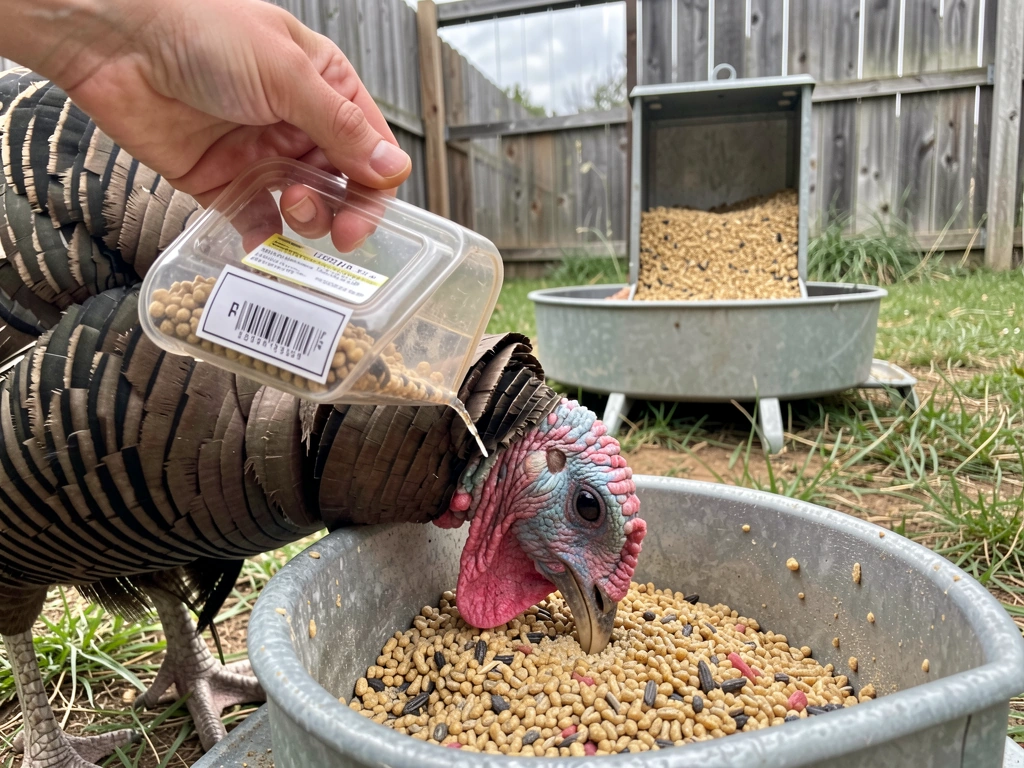
Turkeys have different nutritional requirements than chickens and should be on turkey-specific feed matched to their life stage, whether that is brooding, growing, or finishing. One common mistake is feeding turkeys chick starter meant for chickens. Beyond the nutritional mismatch, there is a disease risk: the protozoa that cause coccidiosis in chickens are different from those that affect turkeys, so medicated chick starter formulated for chickens does not adequately protect turkey poults. Most growers switch turkeys to a grower ration around six weeks of age.
Incubation takes longer
Turkey eggs take about 28 days to hatch, compared to roughly 21 days for chicken eggs. If you are incubating both species at the same time, you have to track them separately because setting them together on the same schedule will not work. The week-long gap is not a minor detail you can fudge.
Egg production looks very different
Turkey hens are not prolific layers the way chickens are. A breeder hen typically lays for about 28 weeks and produces up to around 130 eggs during that window. Turkeys also have a strong broodiness instinct, which is basically the bird deciding it wants to sit on a nest and hatch eggs rather than keep laying. Broodiness signs usually show up three to four weeks after laying begins and can cause a noticeable drop in egg production. Chicken breeds have had a lot of that broodiness selected out over generations; turkeys have not.
Housing and predator risks are different too
Turkeys need to be secured at night just like chickens, but their size and behavior make some housing setups that work fine for chickens risky for turkeys. Blackhead disease is also a real concern when turkeys have access to ground that chickens have used, since chickens can carry the organism that causes the disease without showing symptoms. Keeping species separate, especially on the ground, is often the safer call.
So is turkey a bird or a fowl? Both, kind of
The word "fowl" is a broad, informal term that covers domesticated birds kept for food, including both turkeys and chickens. So when someone asks "is turkey a bird or fowl," is turkey a bird the real answer is that it is a bird, and it also qualifies as a fowl in everyday usage. These are not competing categories. The same logic applies to the phrasing "is turkey a chicken or a bird." It is a bird, full stop. Chicken is a separate species, not a category that turkeys belong to.
The quick version if you just need the facts
- Turkey is a bird, not a chicken. They are different species.
- Both belong to the order Galliformes and family Phasianidae, making them distant relatives.
- Turkeys fall under the subfamily Meleagridinae; chickens are in Phasianinae.
- Wild turkeys can fly in short bursts. Most domestic turkeys cannot due to their size.
- Turkey eggs take 28 days to hatch, about a week longer than chicken eggs.
- Turkeys need turkey-specific feed, not chicken starter or layer feed.
- The informal term "fowl" applies to both, but that does not make them the same animal.
If you are just curious about what category turkeys fall into, they are birds , specifically large gallinaceous birds that share a family with chickens, pheasants, and quail. If you are raising them, the practical differences in feed, incubation, disease risk, and egg production matter a lot more than the taxonomy. Either way, a turkey is its own thing, and it has been for a very long time.
FAQ
If a turkey is a bird, does it belong to the same family as chickens?
Yes and no. They share a higher-level grouping (the same broad order and overall “galliform” landfowl group), but they split into different subgroups. The practical takeaway is that they are related enough to look similar in some broad ways, but different enough that you should not treat their care, diet, or breeding schedules as the same.
Is turkey meat “chicken” like people sometimes say, especially at the store?
No. Turkey and chicken come from different bird species, so the meat has different fat content, flavor, and cooking behavior. If you use a recipe meant for chicken, expect different moisture and cook times, and you will usually need to rely on internal temperature rather than time alone.
Can I hatch turkey eggs and chicken eggs in the same incubator at the same time?
You can use the same machine, but do not put them on the same schedule or assume identical settings. Turkey eggs typically hatch closer to 28 days, and the turn and humidity patterns may need adjustment so both species stay in their target ranges. Best practice is to run them on separate hatch windows or use dedicated trays with careful monitoring.
Do turkey poults get the same “chick starter” as baby chickens?
No. Turkey poults need turkey-specific feed matched to their stage. A common mistake is giving medicated chick starter meant for chicken coccidia problems, which does not always provide the right protection for turkey-specific coccidia types. Plan on switching rations around the time many keepers move turkeys to a grower feed, typically around the six-week mark.
What happens if I accidentally feed adult turkeys a chicken ration?
Often it will not cause an immediate catastrophe, but it can lead to poor growth, nutrient imbalance, and worse health over time. Chicken feeds are formulated around chicken nutrient needs and production patterns. If you are raising turkeys to a specific goal (breeding, growth, or finishing for meat), use turkey feed for that purpose.
Do turkeys and chickens get along, or does “same order” mean similar behavior?
Different species tend to behave differently even when they share an order. Turkeys can be more prone to stress from crowding and their pecking order dynamics can be different. Start with proper space, separate feed stations, and observe closely during the first couple of weeks after introducing them.
If turkeys can fly, are they harder to keep contained than chickens?
Usually yes, at least for wild birds. Wild turkeys can make short, quick flights to clear obstacles or reach roost spots. Domestic turkeys often cannot fly well due to body size and breeding, but you should not assume they are flight-proof. If containment matters, use fencing and consider roost setup rather than assuming they will not launch.
How can I tell the bird is a turkey (not a chicken) without getting close?
Look for the body shape and tail display cues, especially in males. Turkeys commonly show a fan-shaped tail and, in the wild, the snood and wattle area around the face. Chickens typically do not have that same fan-tail display and do not show the same facial fleshy growth pattern.
Next Article
Is a Dodo Bird a Dinosaur? Clear Answer and Next Steps
Short answer: dodo isn’t a dinosaur, but birds are dinosaur relatives. Here’s the clear split and how to think it throug