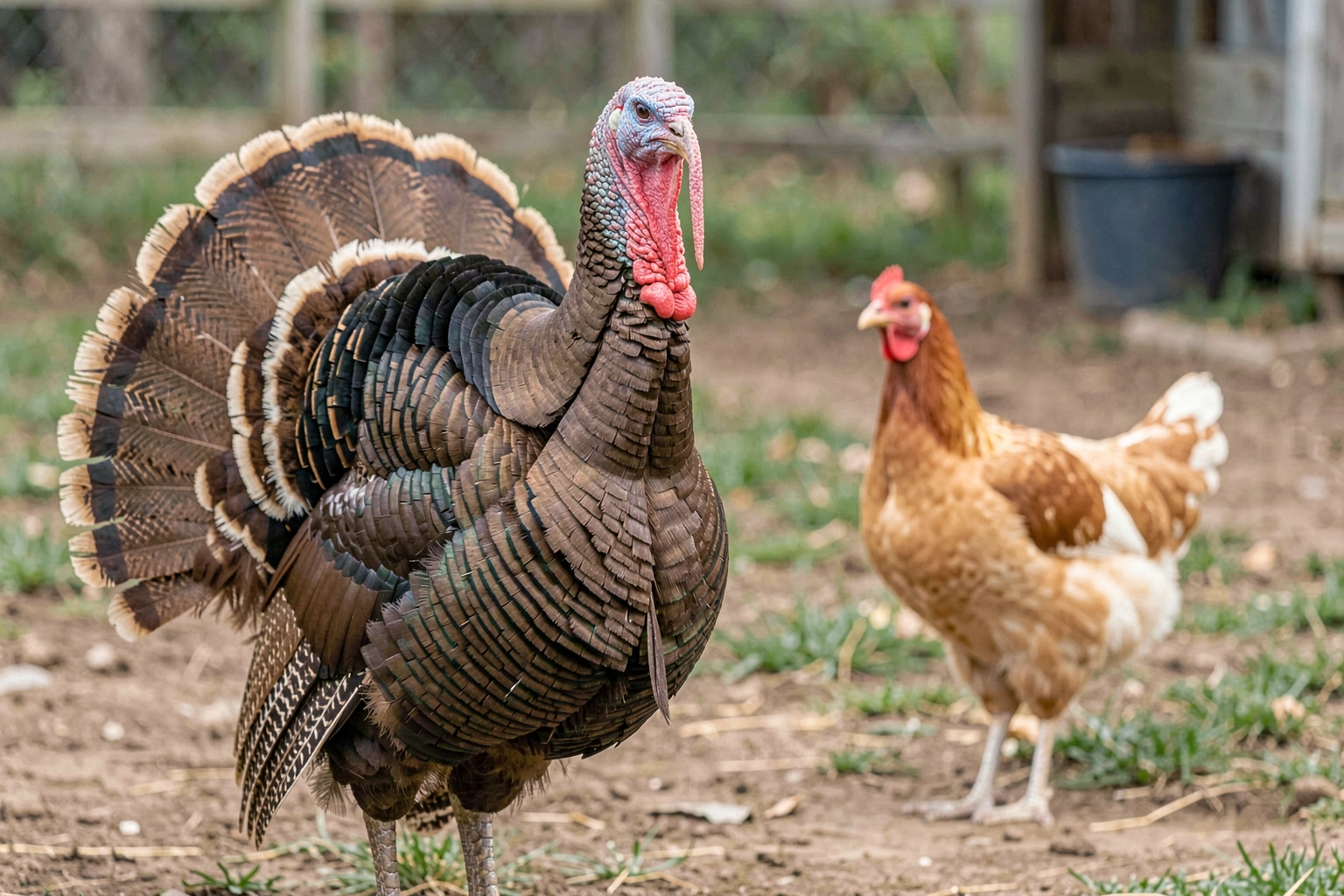
No, a turkey is not a flightless bird. Wild turkeys can fly, and they do it well enough to hit speeds of up to 55 miles per hour. The confusion is understandable, especially if you have only ever seen the big, slow domestic birds waddling around a farm. But wild turkeys are genuinely capable fliers, and that matters more than the reputation.
Is a Turkey a Flightless Bird? Wild vs Domestic Answer

Maya Bennett
20 Mar 2026
The quick answer for anyone in a hurry
Wild turkeys can fly. They use flight to escape predators and to get up into trees at night where they roost safely off the ground. According to the U.S. Fish and Wildlife Service, wild turkeys reach up to 50 mph in the air and can cover about a quarter mile in a single burst. That is short-distance, powerful flight, not long-distance migration, but it absolutely counts. They are not flightless birds.
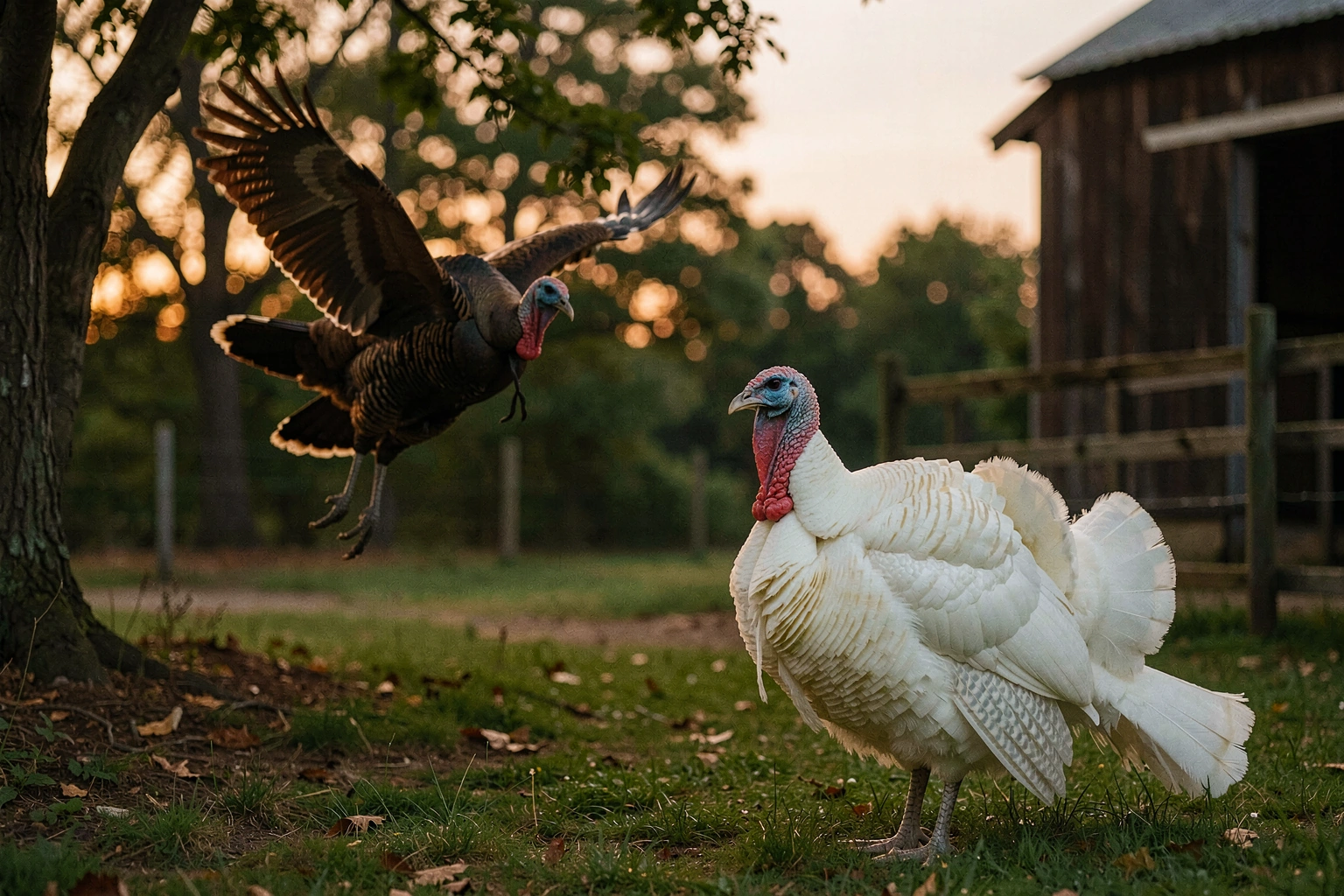
Domestic turkeys are a different story. Breeds like the Broad Breasted White have been selectively bred to grow so heavy that their body weight is wildly out of proportion to their wing area. Some of them genuinely cannot fly at all, which technically makes certain domestic breeds functionally flightless. So the honest answer depends on which turkey you are talking about.
What actually makes a bird flightless
It helps to know what flightless really means before comparing turkeys to the birds that genuinely qualify. True flightless birds, like ostriches, emus, kiwis, and cassowaries, share a specific biological trait: they lack a keel on their breastbone, or have a greatly reduced one. The keel is the bony ridge that anchors the large flight muscles in flying birds. Without it, or with a much smaller version, those muscles cannot develop properly. Flightless birds also tend to have smaller wing bones overall.
Wild turkeys have none of those traits. They have a full keel, functional flight muscles, and wings built for powered flight. Their anatomy puts them firmly in the flying-bird category, even if their flights are short compared to, say, a hawk or a goose.
How wild turkeys actually fly
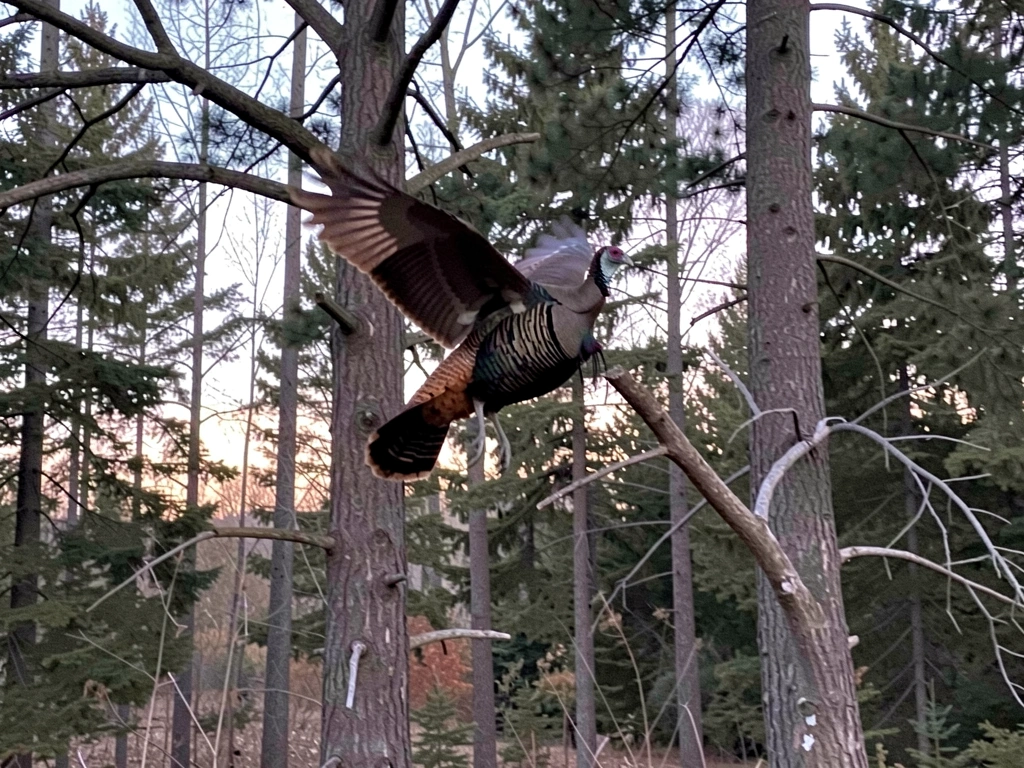
Wild turkeys are not marathon fliers. They do not migrate across states or circle endlessly overhead. Their flight style is explosive and short. When startled, a wild turkey will burst into the air and fly hard for up to about a quarter mile before landing. The Florida Fish and Wildlife Conservation Commission describes them as powerful fliers, especially for short distances, with recorded speeds up to 55 mph.
Every evening, wild turkeys fly up into tall trees to roost overnight. This is a key survival behavior. Getting off the ground keeps them away from ground-level predators while they sleep. If turkeys were truly flightless, roosting in trees would not be possible, and their survival rates in the wild would be dramatically lower.
A wild turkey also has about 18 to 19 secondary feathers per wing. Losing a couple of those feathers can reduce flight quality, but it does not eliminate the ability to fly. Their wings are built with enough redundancy to keep them airborne even with minor feather loss.
Why domestic turkeys seem like they cannot fly
The farm turkeys most people picture were selectively bred over decades to grow as much breast meat as possible. Breeds like the Broad Breasted White put on so much body mass that their wings simply cannot generate enough lift to get them off the ground. The physics do not work anymore. Some of these birds are, in practice, completely flightless, not because of natural biology but because of what selective breeding did to their proportions.
This is worth understanding because it is the root of the confusion. A lot of people's mental image of a turkey comes from domestic birds or from the processed birds at the grocery store. Neither of those give you any sense of what a wild turkey actually does. Wild turkeys and domestic turkeys share the same basic species, but they live very differently.
Wild turkey vs. domestic turkey: how they compare
| Trait | Wild Turkey | Domestic Turkey (Broad Breasted White) |
|---|---|---|
| Can fly | Yes, bursts up to ~55 mph | No, or very limited at best |
| Flight purpose | Escape predators, roosting in trees | Not applicable |
| Body size relative to wings | Proportionate for powered flight | Oversized body, undersized lift |
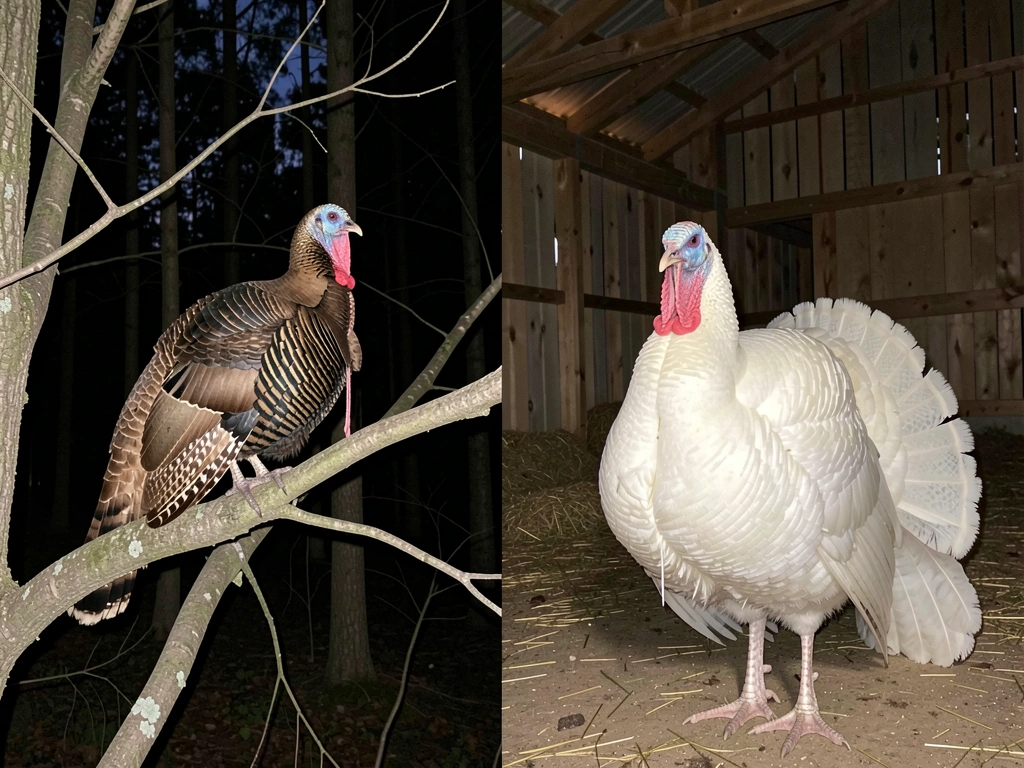
| Roosting behavior | Flies into tall trees at night | Stays on the ground |
| Flightlessness cause | Not flightless | Selective breeding for meat production |
| Keel on breastbone | Yes, full keel | Yes, but body mass negates it |
If you are deciding between the two for the purpose of this question, wild turkeys are clearly not flightless. Domestic breeds exist in a gray zone where the biology is technically there but the body mass makes flight impossible in practice.
What about turkey chicks?
Young turkeys, called poults, are flightless for the first couple of weeks of their lives. They cannot fly at all right after hatching. Around one to two weeks old they start making short, low flights, and by about four weeks they can get up into low branches and small trees. Until they reach that point, they roost on the ground tucked under the hen's wings and tail for warmth and protection.
So if someone sees a very young turkey that cannot fly, that is normal development, not a sign that turkeys as a species are flightless. They grow into their flight capability quickly.
A few things people often get wrong about turkeys
- Turkeys are not in the same category as ostriches, emus, or kiwis. Those are true flightless birds with specific skeletal differences. Turkeys share none of those traits.
- The Thanksgiving turkey on your table came from a breed that was designed to be heavy, not a naturally flightless animal.
- Wild turkeys on foot move at up to 18 mph, so even when they are not flying they are not slow.
- Turkey flight is short and explosive, not soaring. Do not expect them to circle overhead like a hawk.
- Losing a few flight feathers slows a wild turkey down but does not ground it entirely.
How to tell if a bird is truly flightless
The clearest markers of a genuinely flightless bird are structural. No keel on the breastbone, reduced or vestigial wings, and wing bones that are significantly smaller than what you would expect for a bird of that size. These are the features you see in ratites like ostriches and rheas, and in birds like the kiwi. Turkeys do not have any of those features. Their breastbone has a proper keel, their wings are developed and functional, and their flight muscles are real.
If you ever spot a wild turkey in the field and wonder whether it can fly, watch what it does when startled. It will almost certainly burst into the air within seconds. That explosive, low-altitude sprint through the air is one of the more impressive things a large bird can do, and it settles the question pretty fast.
The bottom line
Is turkey a flightless bird? For wild turkeys, the answer is a clear no. is turkey a bird or chicken is a wild turkey a game bird so a turkey is a bird They fly, they fly fast, and they depend on flight to survive. Domestic turkeys, especially the heavy commercial breeds, have been bred into a body shape that makes flight impossible, which puts them in a different category entirely. If the question is about the species as a whole, wild turkeys carry the day, and the answer stays the same: turkeys can fly.
FAQ
If a turkey only flies a little, does that still count as flight?
A wild turkey can’t hover or fly like a pigeon, but it does powered flight. If it gets startled, it may take off fast and cover a short distance, then land. That short burst, plus its daily roosting in trees, is the practical reason it is not flightless.
Are all domestic turkeys truly unable to fly?
Domestic turkeys are usually “flight-impaired” and some are effectively flightless, but it is not guaranteed across every farm bird. Body condition, age, and breeding line matter, so you can see a range from no takeoff at all to very short, clumsy gliding.
Can turkey chicks fly yet, or are poults flightless?
Yes, poults start out flightless, then gradually learn. In practical terms, expect zero flight at hatch, limited short low hops by roughly 1 to 2 weeks, and more capable flights closer to when they can reach low branches around a month.
How can I tell whether a turkey I see is wild or domestic based on flight or roosting?
Look for roosting behavior and anatomy clues. Wild turkeys regularly move into tall trees to roost overnight. Domestic birds usually roost on the ground or with the flock, because their body-to-wing proportions do not support takeoff.
What actually makes some domestic turkeys unable to fly: missing anatomy or body size?
Selective breeding is the big driver for domestic “flightless in practice” birds. Many have normal basic turkey anatomy, including a keel, but extra body mass and altered proportions mean the wings cannot generate enough lift for takeoff.
Is “flightless” about how far they fly, or about anatomy?
If you’re comparing “flightless” to “can’t fly much,” use a biological definition first. Flightless birds have structural changes like a reduced or absent keel that prevent normal powered flight muscle attachment. Turkeys generally do not have those structural flightless traits, even if their flights are short.
What should I do if I find a turkey that looks like it cannot fly?
If you find a turkey that seems unable to take off, don’t assume it is flightless. It could be a domestic bird, a young poult, injured, exhausted, or just wary and choosing to run instead of fly. The best next step is to check for injury and look for whether it can climb or hop onto low branches.
Why might a turkey seem not to fly at all one day, then suddenly take off the next?
Yes. Turkeys can change behavior under danger, so you may observe little or no flight when they are calm, then sudden bursts when startled. Also, wind, terrain, and how close the bird is to cover can determine whether it flies or runs first.
Are turkeys capable of long-distance flight or migration by air?
They can, but not in the “get out of trouble” way people imagine for larger fliers. For wild turkeys, flight is mostly a short escape tool to reach safety quickly, then they land and keep moving on foot. That matches their roosting-in-trees strategy.
How do I give the cleanest yes-or-no answer without oversimplifying?
If your goal is to answer the question accurately for someone else, use this rule of thumb: wild turkeys are not flightless, and domestic turkeys may be unable to fly because of breeding and body weight. When in doubt, specify “wild vs domestic” or “poults vs adults,” since age and breeding line change the outcome.
Next Article
Is Turkey a Bird or a Chicken? Direct Answer and Differences
Turkey is a bird, not a chicken. Key biological and practical differences like feed, incubation, and flight.