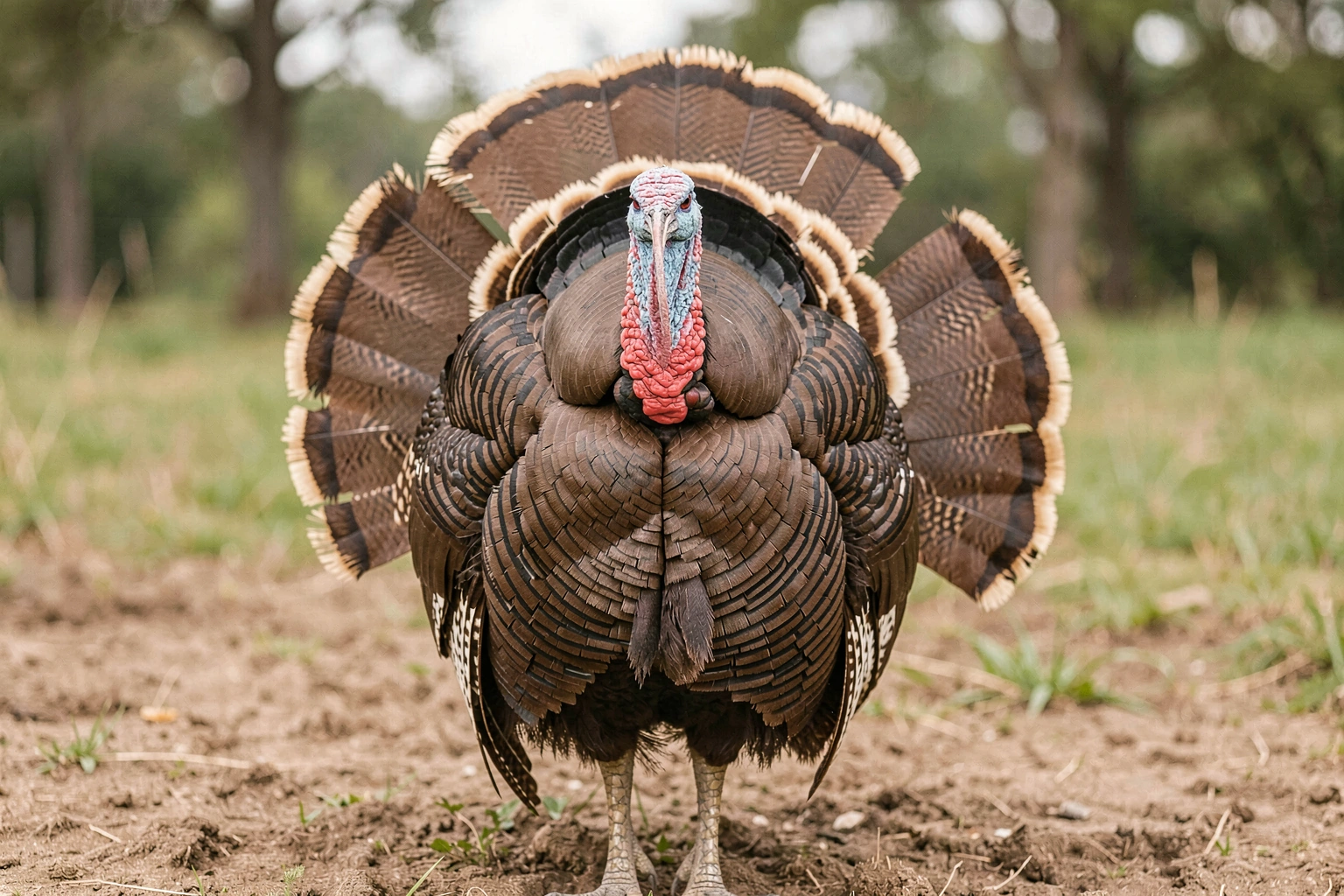
The Hokie Bird is not exactly a turkey, but it evolved directly from one, and Virginia Tech will be the first to tell you so.
Is the Hokie Bird a Turkey? The Real Answer and Why

Maya Bennett
20 Mar 2026
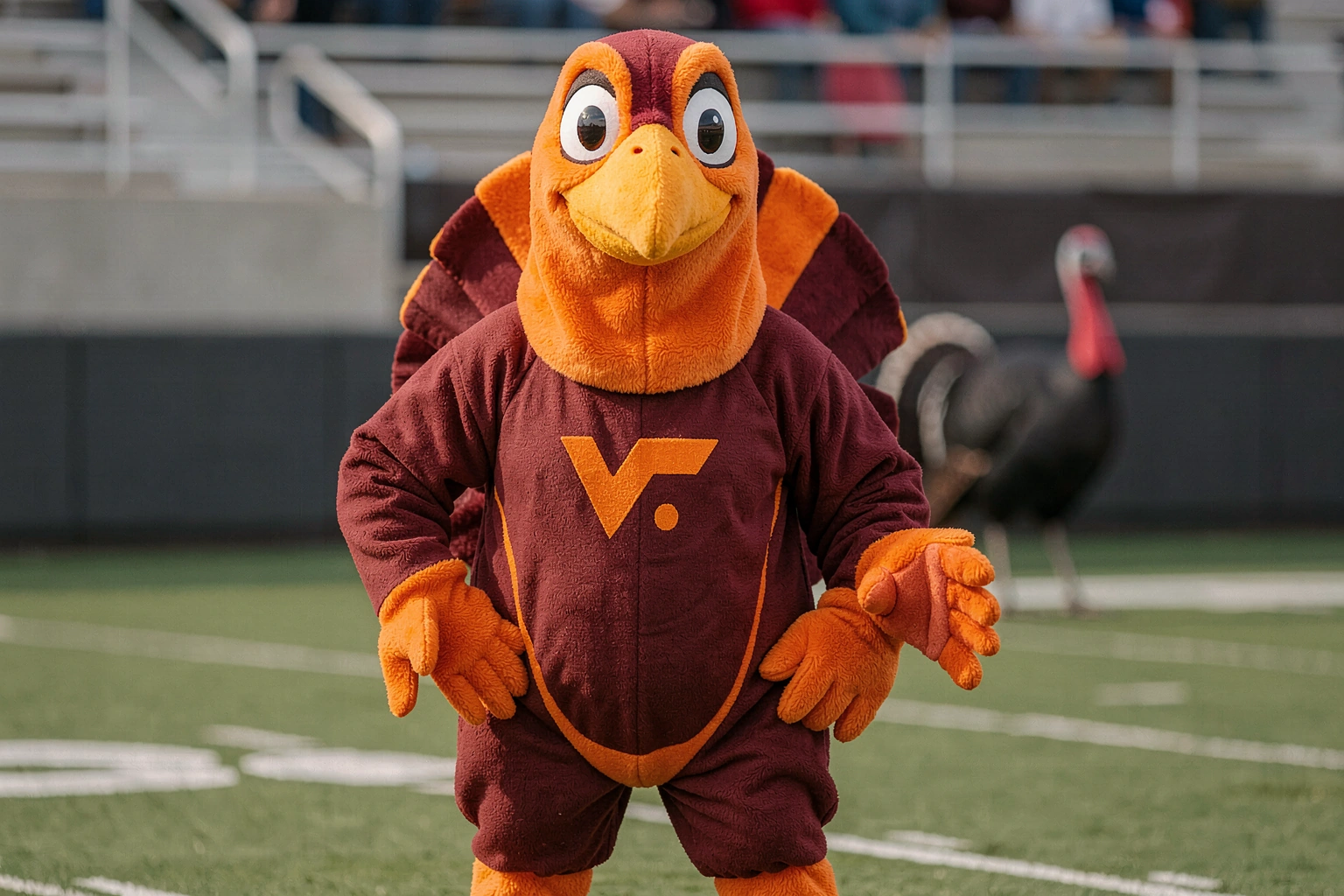
If you have ever looked at the Hokie Bird and thought, "that kind of looks like a turkey," you are not wrong. The connection is real and intentional. But the mascot has gone through decades of redesigns that have pushed it further and further away from looking like an actual turkey, to the point where today it reads more as a bold, stylized bird character than a farm bird. So the honest answer is: turkey in origin, not quite a turkey anymore in appearance.
Where the turkey connection comes from
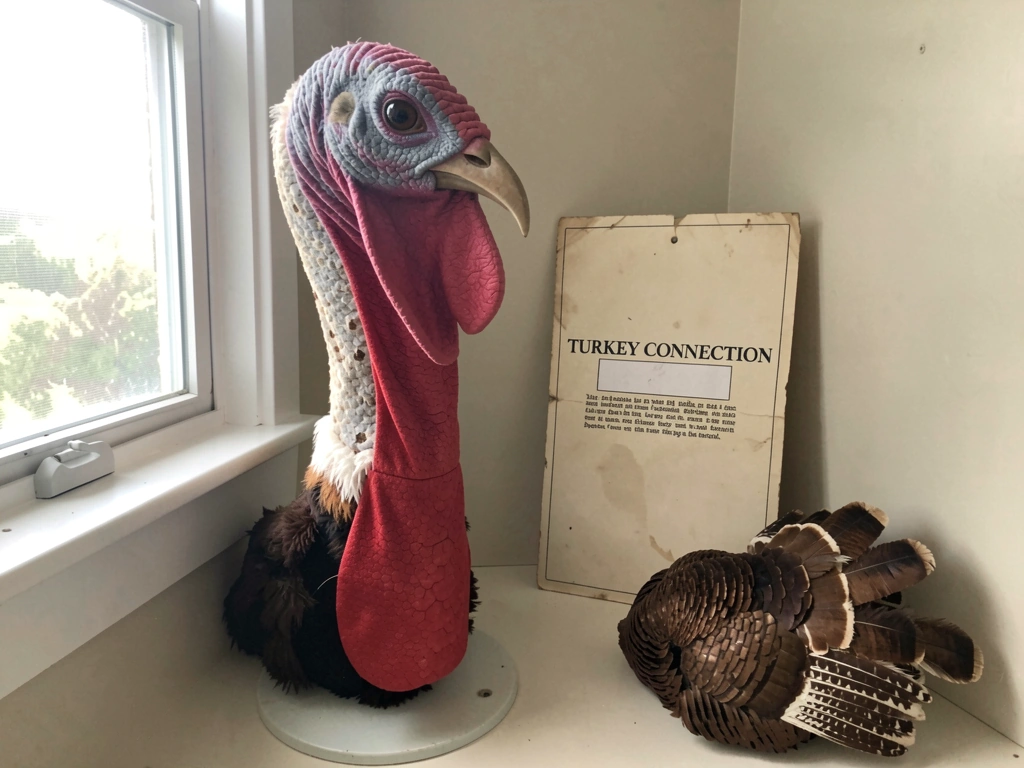
Virginia Tech's athletic teams were once called the Gobblers, which is a common nickname for a male wild turkey. The original mascot was, by most accounts, an actual turkey, and the early costumed versions leaned hard into that identity. The school's own athletics department frames the Hokie Bird's history as a "Turkey timeline," which tells you a lot about how seriously they take that lineage.
The earliest costumed version of the bird reportedly appeared around 1913, and a longer-necked costume debuted in 1971. Those versions were pretty clearly turkey-coded. Nobody was confused about what animal they were looking at.
When things started moving away from turkey territory
In 1982, the mascot got what Virginia Tech Athletics describes as a "drastic makeover." The goal was to make the bird convey more power and strength while still being a turkey. The result was a costume that people nicknamed the "diving bell" because of the shape and feel of the head. Some fans were not thrilled, partly because the new version did not look much like a turkey anymore.
Then in 1987, on September 12 during the football season opener against Clemson, the current HokieBird costume debuted. That version is the one most people recognize today. It is bigger, bolder, and more character-like than any real turkey you would see in the wild. Virginia Tech Athletics has described the design goal as needing to "diminish its turkey resemblance" while keeping the spirit of the bird alive.
So what exactly is the Hokie Bird?
Officially, Virginia Tech Athletics calls the HokieBird a bird that is a wild turkey a game bird "has evolved from a turkey." That is the clearest statement you will find from the source itself. Wikipedia describes it as a "turkey-like" creature, which is pretty accurate visually. The mascot is not assigned a strict species label in any formal branding guide. It exists in that mascot zone where it is inspired by a real animal but is not meant to be a precise replica of one.
Interestingly, "Hokie" itself does not mean turkey. Virginia Tech defines a Hokie as a "loyal Virginia Tech fan," which is a separate meaning entirely. The turkey connection belongs to the mascot's history, not to the word itself. So the Hokie Bird is a turkey-descended mascot representing a school whose fans are called Hokies, but the two things have different origins.
How the Hokie Bird compares to an actual turkey
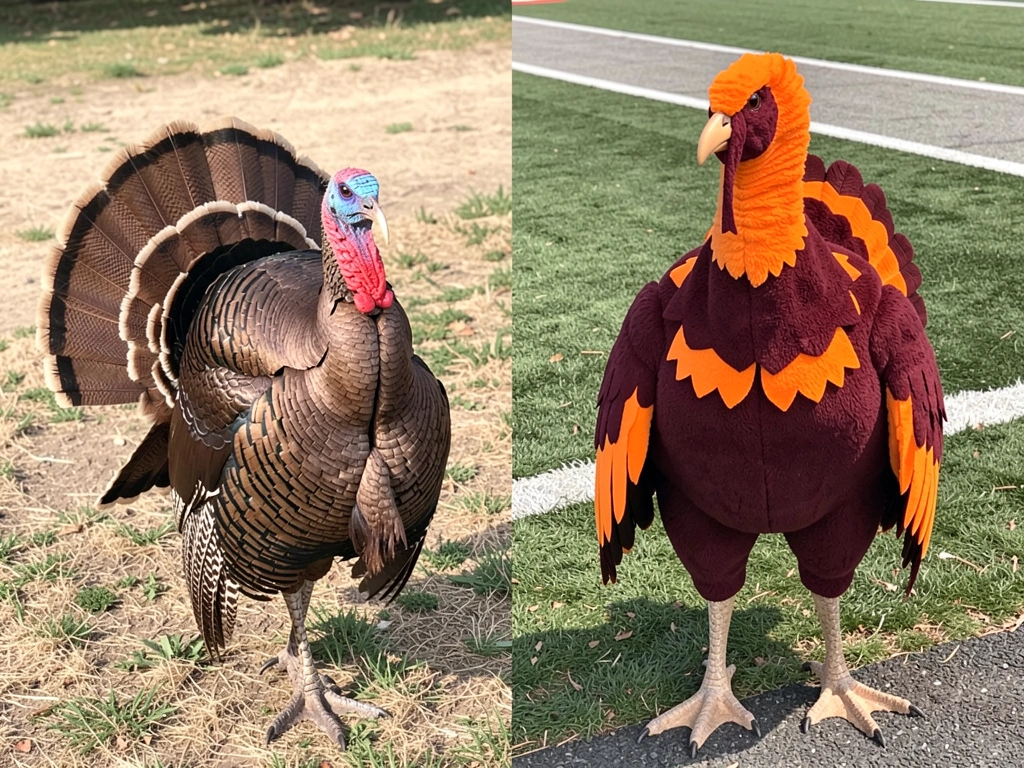
If you put the Hokie Bird next to a real wild turkey, you would notice some clear differences. Real turkeys have a distinctive bare, red and blue head, a fanned tail, brown and bronze feathering, and that signature wattle hanging under the beak. The Hokie Bird shares some general silhouette cues but has been stylized into a much more energetic, cartoonish, mascot-friendly shape. Even Animal Planet's "Turkey Secrets" program once featured the Hokie Bird, which shows that the media still sees it in a turkey frame, even if the design has drifted.
| Feature | Real Wild Turkey | Hokie Bird |
|---|---|---|
| Head | Bare, red and blue skin, wattle present | Stylized, mascot-designed, no wattle |
| Body shape | Rounded, low-slung, ground-hugging | Upright, bold, athletic posture |
| Tail | Fan-shaped when displayed | Simplified or absent depending on costume |
| Feather coloring | Brown, bronze, iridescent | Maroon and orange (VT colors) |
| Overall vibe | Wild game bird | Sports mascot character |
| Species clarity | Clearly a turkey | Turkey-inspired but intentionally stylized away |
The quick verdict
The Hokie Bird started as a turkey, was a turkey for decades, and was redesigned multiple times with the explicit goal of becoming something that felt more powerful and less like a barnyard bird. Today it lives in a middle space: technically turkey-descended, officially called a mascot that "evolved from a turkey," but visually styled far enough away from a real turkey that calling it one outright would be misleading.
- Virginia Tech's teams were once called the Gobblers, a direct turkey reference
- The HokieBird evolved from a turkey mascot that dates back over a century
- A 1982 redesign deliberately reduced its turkey resemblance
- The current costume debuted in 1987 and looks more like a mascot character than a bird species
- Virginia Tech Athletics officially calls it a bird that "evolved from a turkey," not a turkey itself
- "Hokie" means loyal Virginia Tech fan, not turkey
If someone asks you whether the Hokie Bird is a turkey, the most accurate answer is: it used to be, and it still has turkey DNA in its design history, but the version you see on the field today has been deliberately shaped into something bigger, bolder, and harder to pin to any one species. It is a mascot first, a turkey second, and honestly that is a pretty intentional choice on Virginia Tech's part.
FAQ
If the Hokie Bird is not a turkey, what is it officially supposed to be?
It is a mascot character, not a formally labeled species. The key official phrasing to lean on is that it has evolved from a turkey, meaning the lineage is turkey-based even though today’s design is intentionally stylized and not meant to read as a precise wild turkey replica.
Is it ever accurate to call the Hokie Bird “a turkey” in conversation?
Yes, as long as you frame it as a historical or lineage description. If you say it “is a turkey,” some people will push back because the modern costume deliberately reduced resemblance. A safer casual phrasing is “turkey-origin mascot” or “turkey-descended mascot.”
How can I tell which version of the Hokie Bird I’m looking at?
Look at the silhouette and head shape. The costume has gone through redesigns, so older looks are more turkey-coded, while the current, more character-like version (commonly recognized by most fans) is bigger, bolder, and less like a real farm or wild turkey. If the head looks like a distinct shaped feature rather than a turkey head, you are likely in the later stylized era.
Does “Hokie” mean turkey, since people connect the mascot to turkeys?
No. In Virginia Tech’s usage, “Hokie” refers to a loyal Virginia Tech fan. The turkey connection is about the mascot’s origin and the earlier “Gobblers” nickname, not about the word itself.
Was Virginia Tech ever called the “Gobblers” because they really had turkey-related mascots?
Yes, the “Gobblers” nickname is a direct wild turkey reference, and the mascot started with turkey-coded identity. The important caveat is that even if the early costume looked like an actual turkey, the modern costume is designed to be a stylized mascot that moved away from exact species traits.
Why did Virginia Tech redesign it to look less like a turkey?
The stated goal was to emphasize power and strength while still maintaining the turkey-based spirit. Practically, that means the later costume choices changed proportions and head/shape cues so it reads more as a sports character than a game bird.
If I’m making a meme or a post, what wording avoids getting corrected?
Use “turkey-origin” or “turkey-descended.” That gives people the lineage answer without implying it is biologically or visually identical to a real wild turkey. If you want it extra safe, add “mascot” to the phrase.
Could the Hokie Bird be a different bird species that just looks turkey-like?
Not in the sense of an official alternate species label. The mascot is treated as a turkey-evolved character, with its modern design intentionally drifting from real-turkey identifiers like the bare red and blue head skin and other very specific turkey features.
Does the costume sometimes look more turkey-like than other times?
It can, depending on the costume build, lighting, and whether you are seeing photos or broadcasts from specific eras. Since the mascot has been redesigned multiple times, your best check is to compare the head and tail cues to what you see in older versus current costume photos.
What’s the fastest one-sentence answer to “Is the Hokie Bird a turkey?”
No, it is a sports mascot, turkey in origin, but its modern design is intentionally stylized away from looking like a real wild turkey.
Next Article
Is a Turkey a Mammal or a Bird? The Direct Answer
Direct answer: a turkey is a bird, with feathers, egg-laying, wings, and its Galliformes classification.