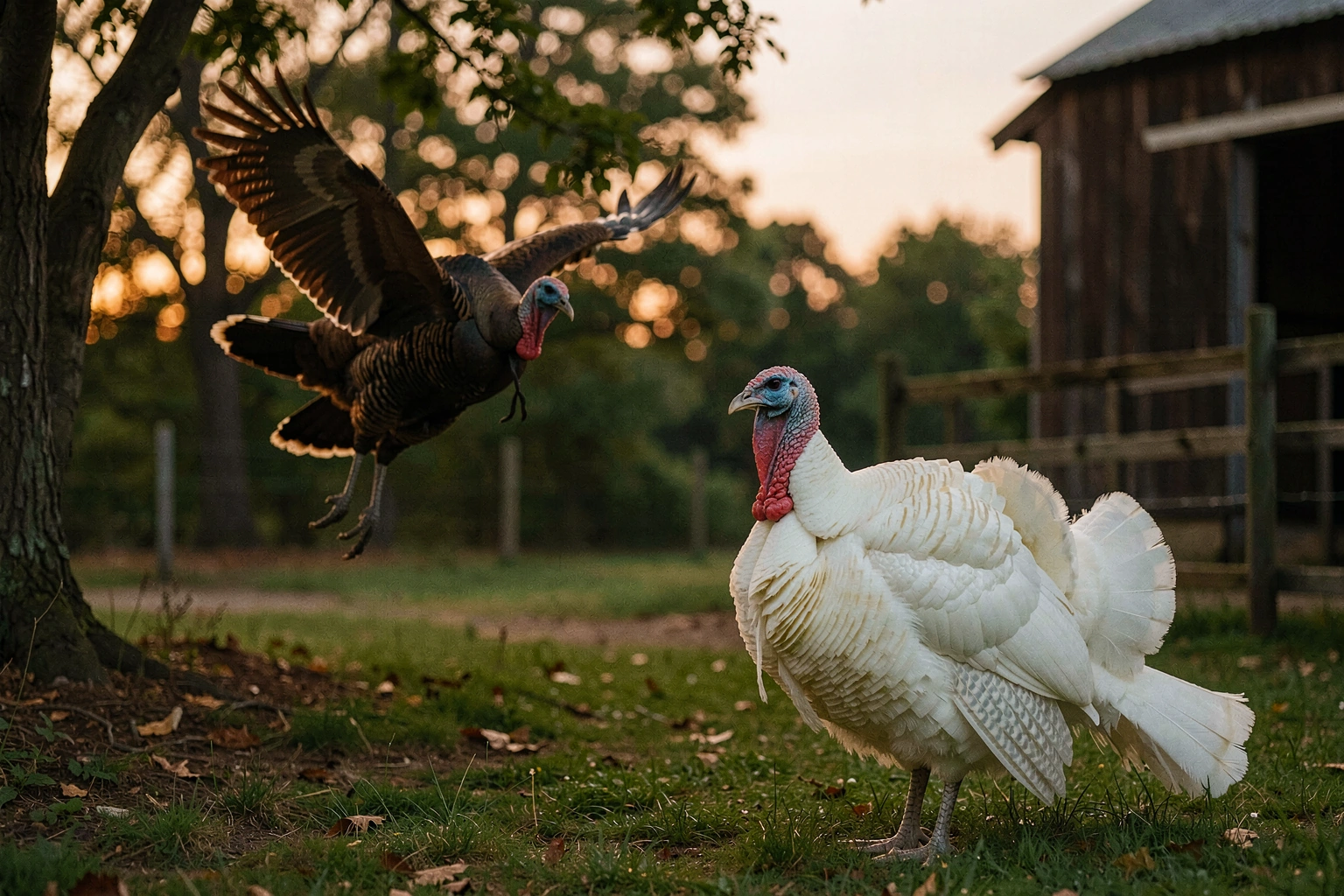
A turkey is a bird, full stop. There is no debate here among scientists or naturalists. Turkeys are classified within the order Galliformes, the same broad group that includes chickens, pheasants, and quail, and every defining trait they carry points squarely to the bird category.
Is a Turkey a Mammal or a Bird? The Direct Answer

Maya Bennett
20 Mar 2026
What actually makes something a bird vs a mammal
It helps to know what separates the two groups before looking at turkeys specifically. Birds and mammals share the fact that they are both warm-blooded vertebrates, which is why the question comes up at all. But the differences between them are easy to spot once you know what to look for.
| Trait | Birds | Mammals |
|---|---|---|
| Body covering | Feathers | Hair or fur |
| Reproduction | Lay and incubate eggs | Mostly live birth |
| Feeding young | Regurgitation or foraging | Nurse with milk |
| Forelimbs | Wings (even if flightless) | Arms, legs, or flippers |
| Beak or mouth | Hard beak, no teeth | Jaw with teeth (usually) |
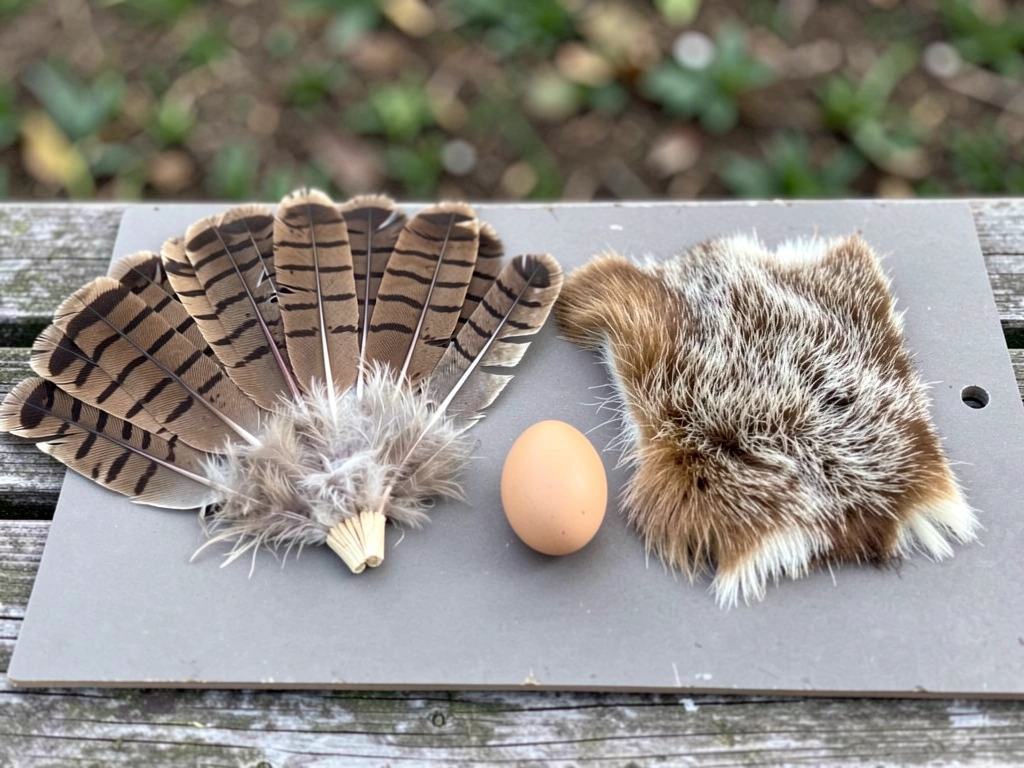
Mammals nurse their young with milk, give birth to live young in most cases, and are covered in hair or fur. Birds hatch from eggs, have feathers, and have wings instead of true arms. Turkeys check every single box in the bird column.
Where turkeys officially fit
Encyclopaedia Britannica describes a turkey as 'either of two species of birds' belonging to the order Galliformes. PBS Nature similarly opens with 'The turkey is a large bird in the genus Meleagris.' The scientific name for the wild turkey (the ancestor of most domestic turkeys) is Meleagris gallopavo. Depending on the classification system being used, turkeys sit in either the family Phasianidae (shared with pheasants and peacocks) or their own family, Meleagrididae. Either way, they are birds.
Galliformes is sometimes called the 'chicken-like birds' order, which is why turkeys and chickens get lumped together so often in everyday conversation. They are genuinely close relatives in the bird family tree, not just similar-looking animals that happen to share a dinner table.
The turkey's bird credentials up close
You do not need a field guide to confirm a turkey is a bird. Every trait you can observe in the wild or on a farm points in that direction.
Feathers, not fur
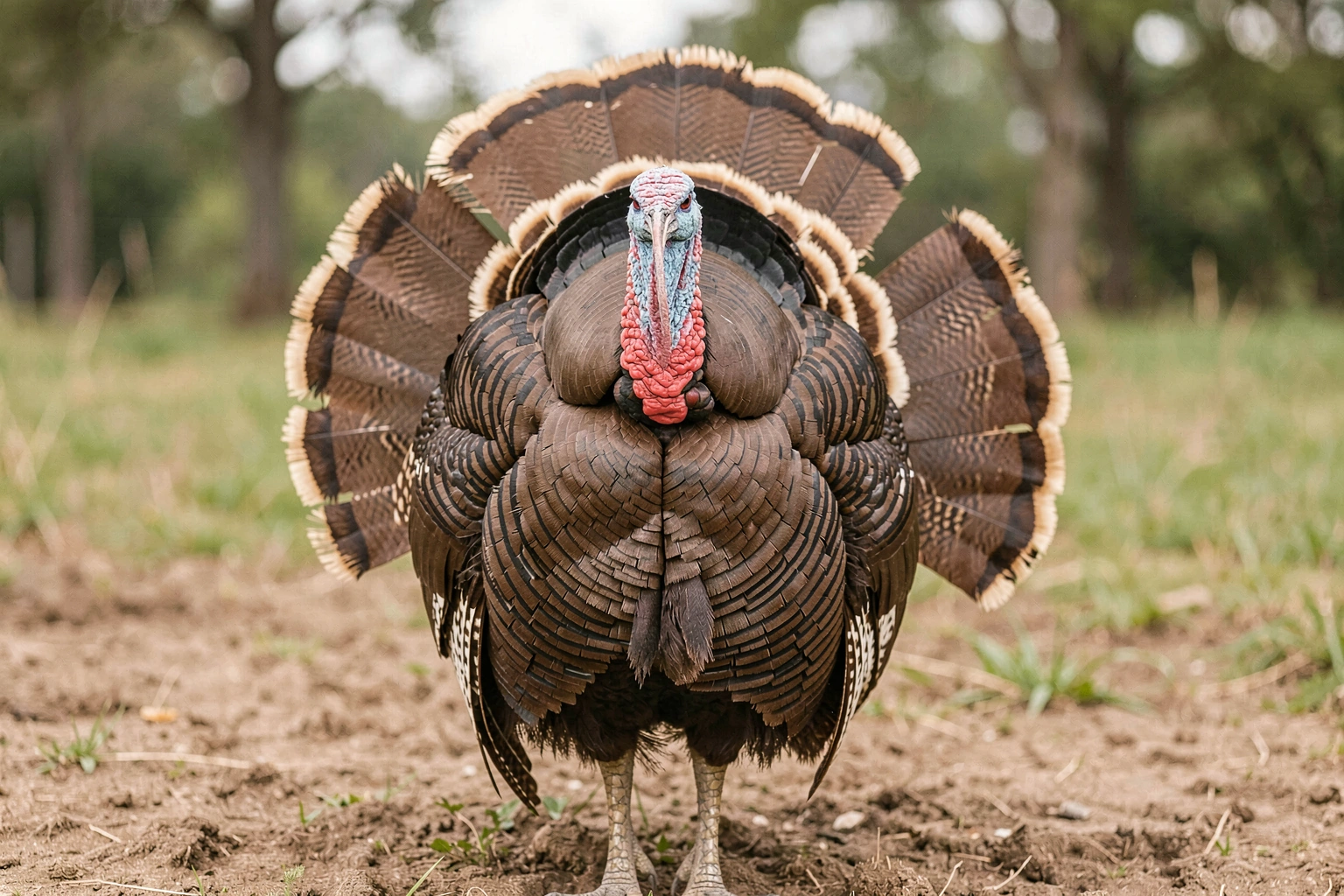
Turkeys are covered in feathers from head to tail, including the distinctive fan-shaped tail feathers that toms (male turkeys) spread during courtship. The bare, fleshy skin on a turkey's head and neck is actually a distinguishing feature, not an exception to the rule. That naked skin is still a bird trait; many bird species have bare patches on their faces or heads.
They hatch from eggs
Hen turkeys lay a clutch of eggs and incubate them for around 28 days before they hatch. Newly hatched turkey chicks, called poults, leave the nest within 12 to 24 hours of hatching. That is classic bird behavior. No mammal incubates eggs like this (with the narrow exception of a couple of egg-laying mammals like the platypus, which is a whole other story).
Wings and a beak
Turkeys have wings and a hard beak, two things no mammal has. Their wings are functional, too. Wild turkeys can actually fly, though they tire quickly and tend to use short bursts to escape predators or get up into a tree to roost. The domestic turkey, bred for size and meat, has a harder time getting airborne, but that is a result of selective breeding, not a sign it belongs to a different class of animal.
Quick species profile
- Class: Aves (birds)
- Order: Galliformes (same group as chickens, pheasants, quail)
- Genus: Meleagris
- Species (wild and domestic): Meleagris gallopavo
- Body covering: Feathers
- Reproduction: Egg-laying; 28-day incubation period
- Flight: Yes, short bursts (wild turkey); limited in domestic breeds
- Close relatives: Chickens, pheasants, peacocks, quail
Why the confusion even comes up
Most people who wonder whether a turkey is a mammal or a bird are not really confused about biology. The question tends to pop up for younger students learning animal classifications, or for anyone who has only ever seen a turkey on a plate and never stopped to think about where it sits in the animal kingdom. It is also worth noting that turkeys look unusual compared to the birds most people picture first. The bare red wattle dangling from a tom's beak, the fleshy blue and red head, the heavy body, all of it can make turkeys seem unlike a typical bird. But unusual appearance does not change the classification.
Turkeys also share the 'poultry' and game bird designation labels with chickens, which are clearly birds, so anyone who already knows that chickens are birds can use the same logic for turkeys. They are galliform cousins, not a separate type of animal.
The fast take
Turkey = bird. It has feathers, lays eggs, has wings and a beak, and is officially classified in the order Galliformes by every major scientific authority including Encyclopaedia Britannica, PBS Nature, and the Animal Diversity Web. It shares none of the defining traits of mammals: no fur, no live birth, no milk production. If someone tells you a turkey might be a mammal, you can confidently set the record straight.
FAQ
If a turkey is too heavy to fly, does that make it not a bird?
It’s still a bird, even if the turkey can’t fly well. Domestic turkeys are often selectively bred for size and meat, which makes flight less practical, but having wings and a bird body plan is what decides the classification.
Turkeys look kind of “bare” on the head, so are they still birds?
Yes, a turkey is a bird, but it also has some unusual bird features (like bare, fleshy skin on the head and neck). Those patches are common in birds, especially on display and heat-regulation areas, and they do not change what the species is.
I heard about “egg-laying mammals,” so could a turkey be one too?
The platypus is sometimes mentioned because it lays eggs and then feeds its young differently than most mammals. Even with that exception, it’s still a mammal, and a turkey does not have milk glands or live-birth traits, so it cannot fit the mammal category.
What would I actually look for in a baby turkey to tell it’s not a mammal?
A turkey will always have feathers at any life stage you can observe, and it grows from an egg incubated by a hen. Mammals might be born with hair or even without fur at birth, but they do not incubate eggs or have a beak-and-feather anatomy.
Does the “poultry” label mean a turkey is something else besides a bird?
If you’re thinking about “poultry,” that’s a culinary and farm category, not a biological class. Birds like chickens and turkeys fall under poultry because they’re raised for meat and eggs, but the word does not redefine whether they are birds.
What’s the fastest way to decide bird vs mammal for any animal when I don’t have time?
Quick decision aid: look for feathers, egg-laying, and a beak/wings (or bird-style skeletal features). If those are present, it’s a bird regardless of whether the animal is wild, domestic, large, or looks different from the “typical” backyard bird.
Does the “game bird” category mean a turkey is not a bird in science?
No, being called “game bird” or “fowl” does not make a turkey a mammal. Those terms group animals by hunting or farming context, while classification into Aves is based on anatomy and reproduction.
Why can’t I just use the fact that turkeys are warm-blooded to classify them?
Don’t use “warm-blooded” as your deciding factor. Both birds and mammals are warm-blooded vertebrates, so that trait alone will never answer “is a turkey a mammal or bird.” Use feathers plus egg-laying (or milk/live birth) instead.
If I need a one-sentence answer for school, what should I write?
If you search this question because you’re doing a school assignment, your final answer should be “bird” and your supporting points can be: feathers, egg incubation (about 28 days for wild turkey), wings, and a hard beak. You do not need to mention flight ability because it’s a secondary trait.
Next Article
Is a Turkey a Flightless Bird? Wild vs Domestic Answer
Wild turkeys can fly and roost in trees; domestic breeds may be flightless due to selective breeding.